The history of Kenpo Karate can be traced back in time many years, with roots in the Shaolin Temple of China through many cultures and countries including China, Okinawa, Japan, and Hawaii. Bodhidharma came from India to the Temple to learn to meditate. While there, he created Shaolin Kung Fu and began teaching the Art to the Shaolin Monks in turn. It eventually traveled to and through Okinawa to Japan, then Hawaii before arriving on mainland United States.
The Japanese translation of Kenpo is “Fist Law,” which defines it as an “empty hand,” or weaponless art. It is a style that utilizes quick, powerful strikes, linear and circular strikes, throws, and joint locks, all while following physics and principles of motion. It is best utilized for self-defense.
James Mitose is credited for creating and teaching the Japanese interpretation of Kenpo. Originally trained in Japan, he brought Kenpo to his birthplace of Hawaii and continued to grow, expand, and teach his art. He was the teacher of William K.S. Chow, who continued the traditions and teachings of Mr. Mitose. Perhaps Mr. Mitose and Mr. Chow’s most significant student was a man named Ed Parker.
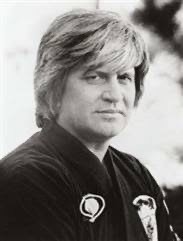
The history of American Kenpo Karate itself begins with Ed Parker (1931-1990). He is known as founder Senior Grandmaster Edmund Kealoha Parker. Mr. Parker was born in Hawaii and began training at a young age in Judo and, later, boxing. Sometime in the 1940s, Ed Parker was introduced to William K.S. Chow and his system of Kenpo. He excelled in his studies and was promoted to the rank of Black Belt in 1953.
Seeing that modern times posed new situations that traditional Kenpo did not address, Mr. Parker adapted the art to make it more applicable to the streets of America and named this style American Kenpo Karate.
Ed Parker opened the first karate school in the western United States in Provo, Utah in 1954, and in 1956 opened a dojo in Pasadena, California. He taught a host of famous and notable students, including Al Tracy and Huk Planas, from whom HKW has descended. *Please see the Howell’s Karate Ways family tree page for a diagrammatical description of this lineage.
True to the spirit and wishes of Ed Parker and his American Kenpo, the art has evolved with each new instructor, who has continued to adapt the art to today’s environment.
(Portions of this document were adapted from https://kenpointernational.org/ history/).